TIFFANY & CO. GINZA: AN ARTISTIC LANDMARK IN THE HEART OF TOKYO
Published on 11.26.2025
7 minutes
- Hall of Fame
- Savoir-faire
- Design & creation
- Watches & Jewelry
In Tokyo, Tiffany & Co.’s largest flagship unites Japanese artistry, contemporary design, and the timeless mastery of jewelry-making. Every detail tells a story, from the sweeping architecture to the curated collections, offering a journey through Tiffany’s heritage and its vision for the future.
Long before Tiffany & Co. opened its first boutique in Tokyo in 1972, the Maison’s designers were captivated by the beauty and precision of Japanese artistry. From delicate lacquerware to the refined geometry of traditional silversmithing, Japan’s materials and techniques left an indelible mark on Tiffany’s creative vision. Over the decades, this fascination evolved into collaboration, with legendary designers like Elsa Peretti working alongside Japanese artisans to craft jewelry and objects that married ancient methods with modern elegance. Today, Tiffany Ginza, the Maison’s largest flagship in Asia, stands as the latest chapter in this enduring dialogue: a space where heritage, culture, and innovation converge in a celebration of craftsmanship.
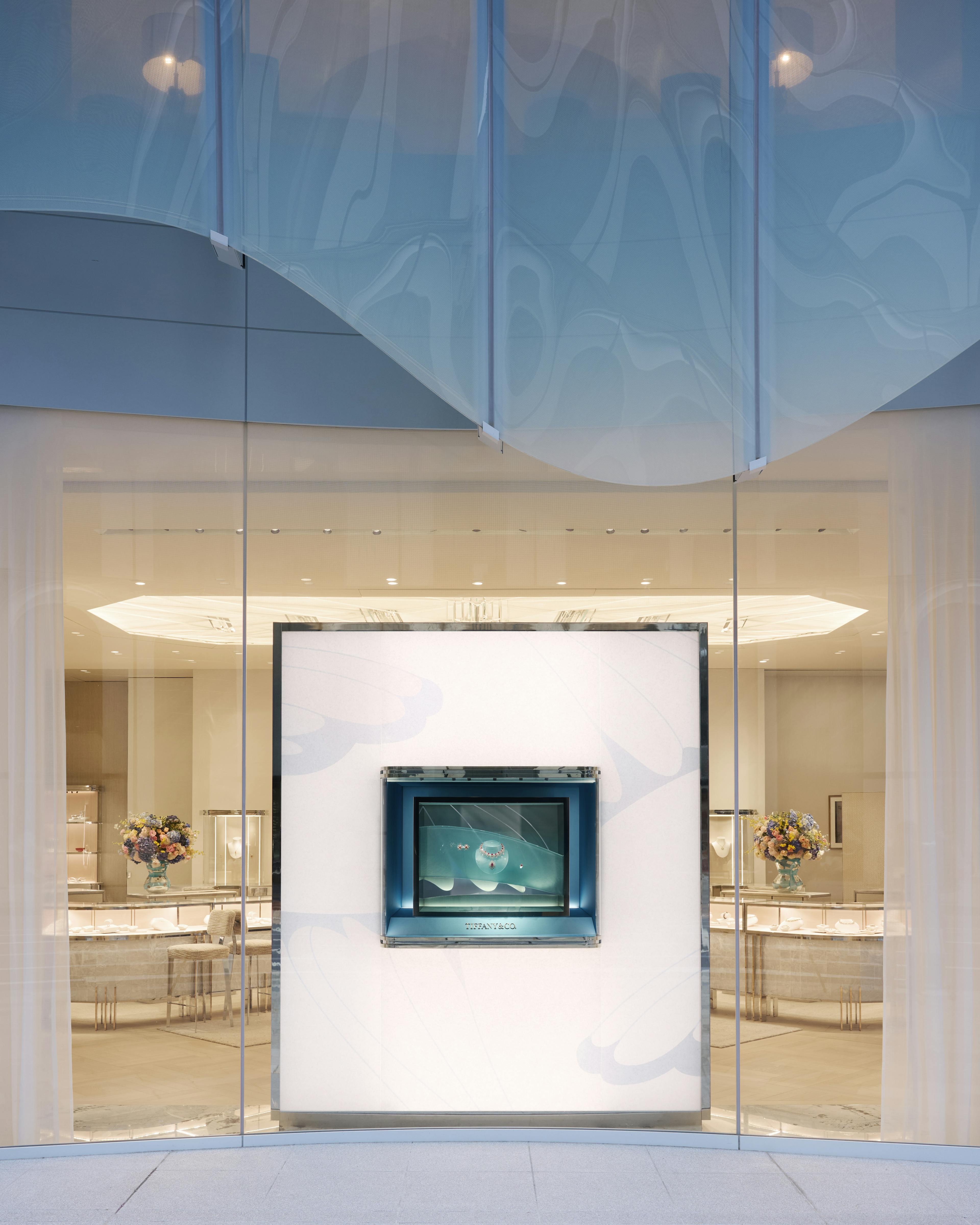
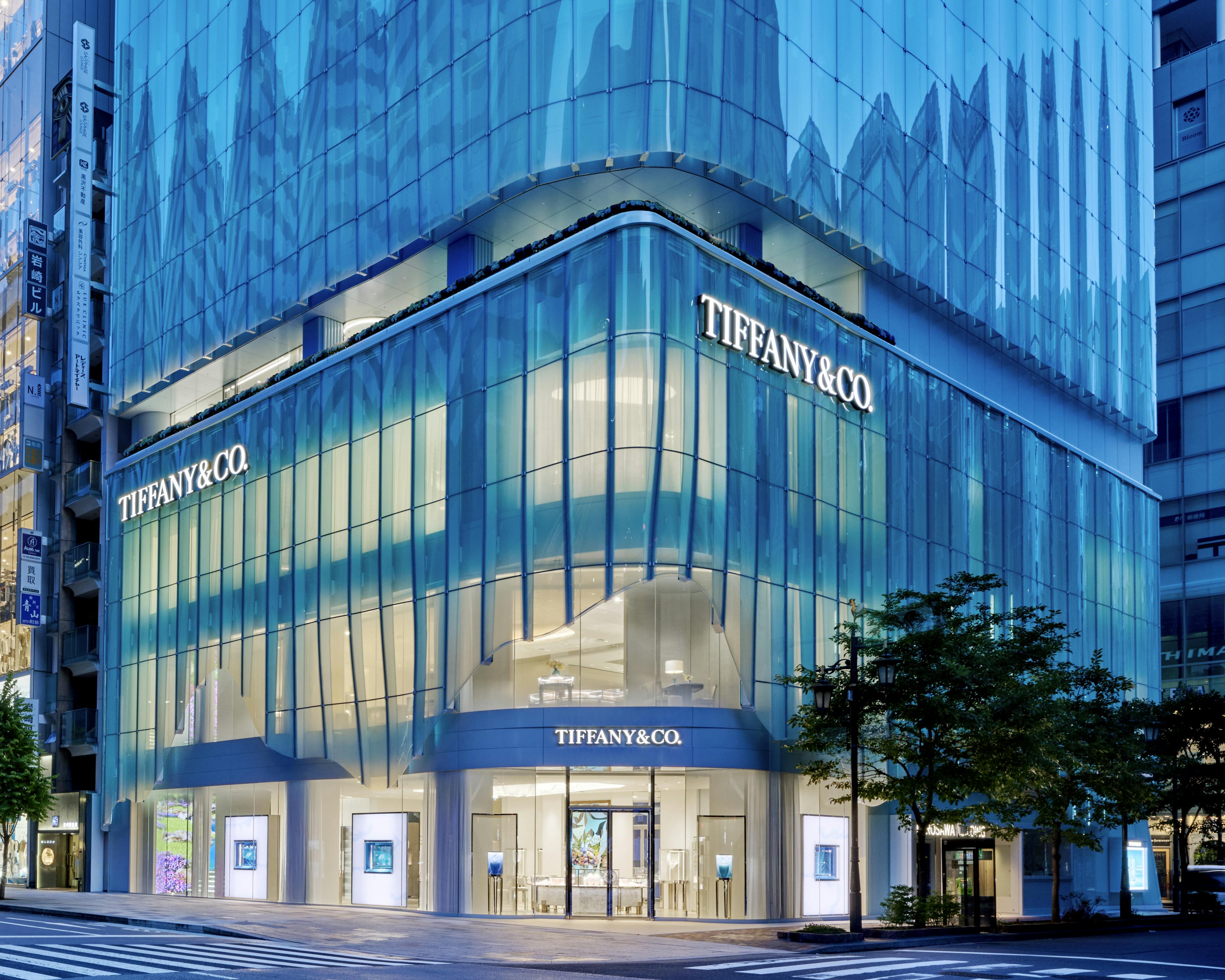
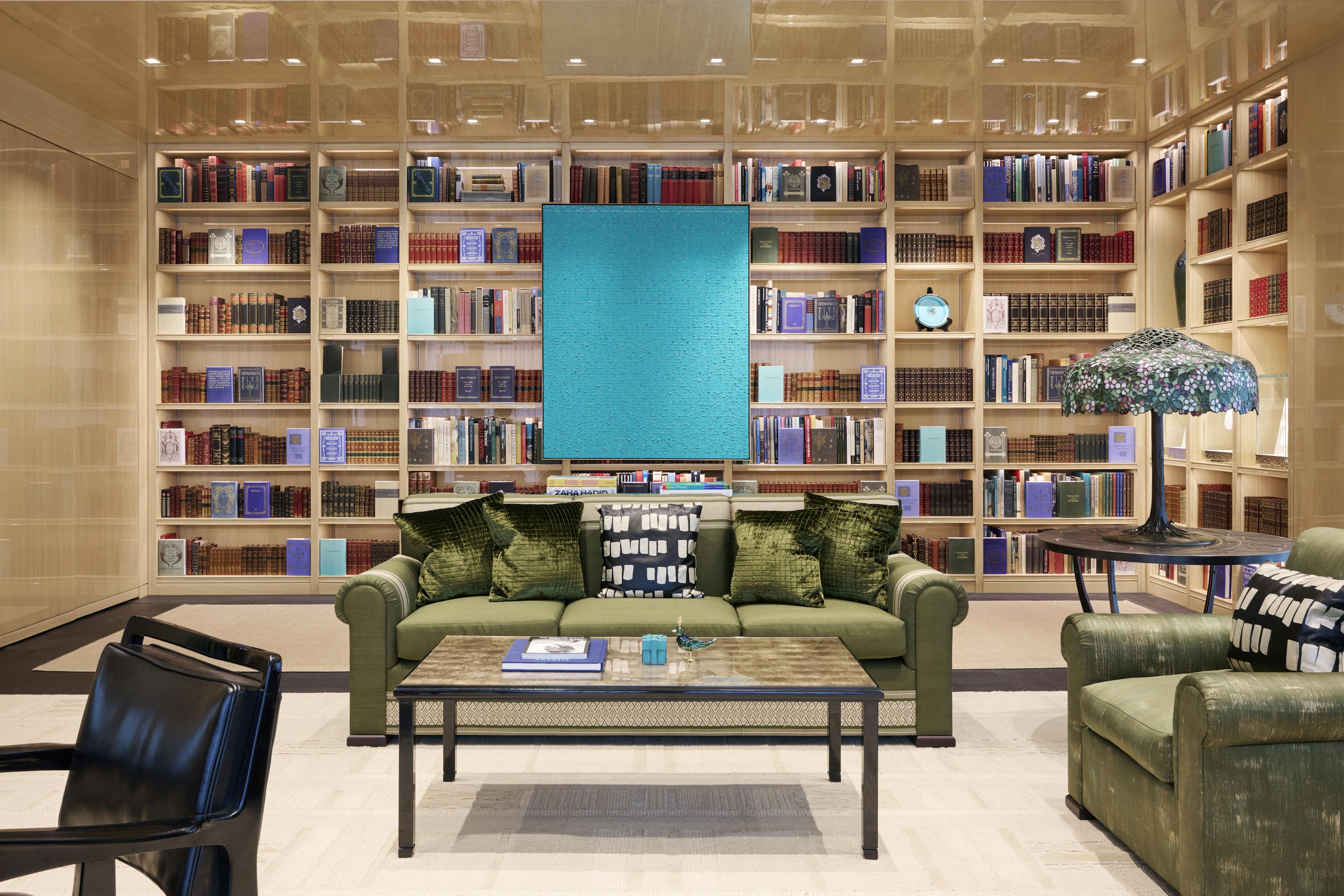
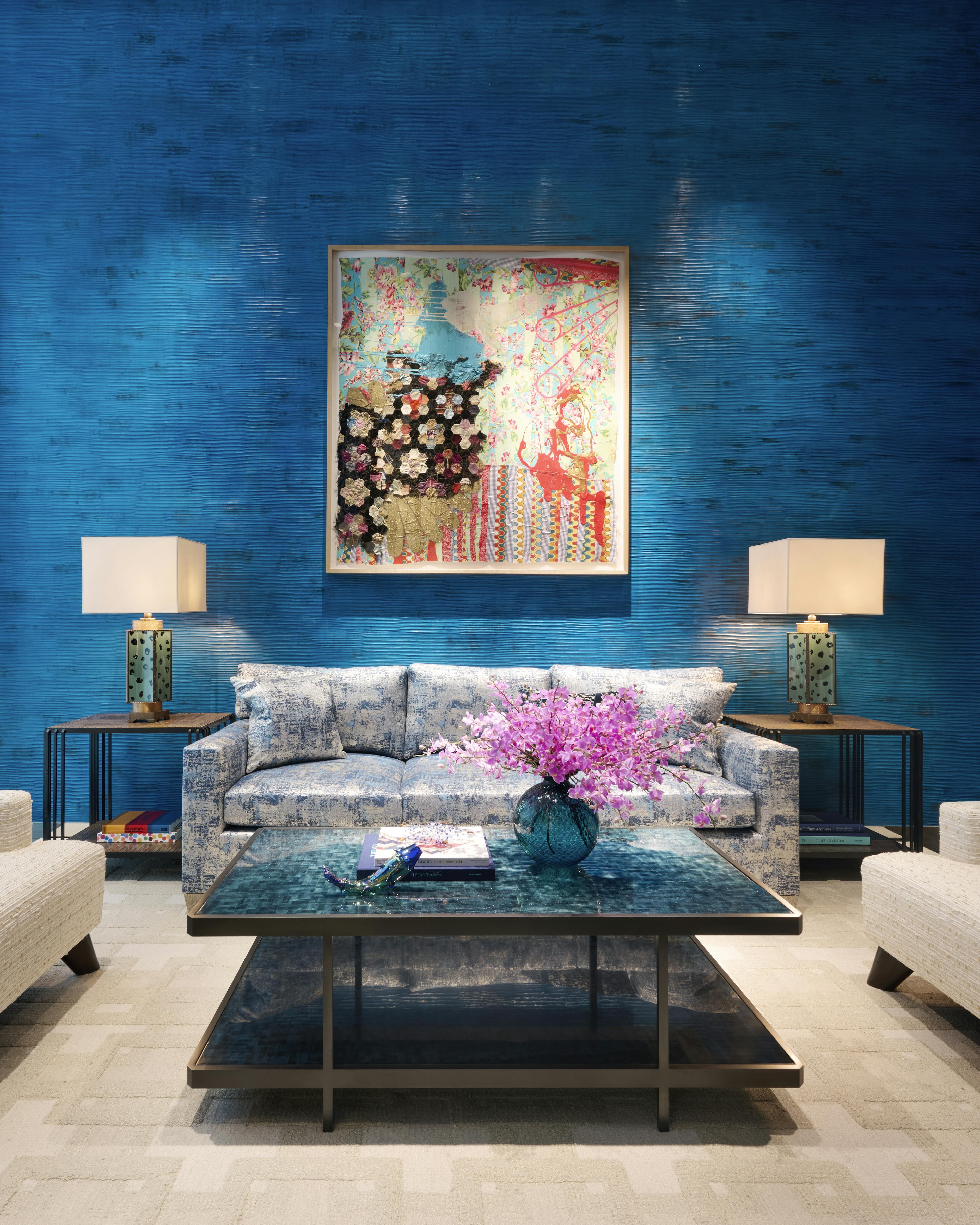
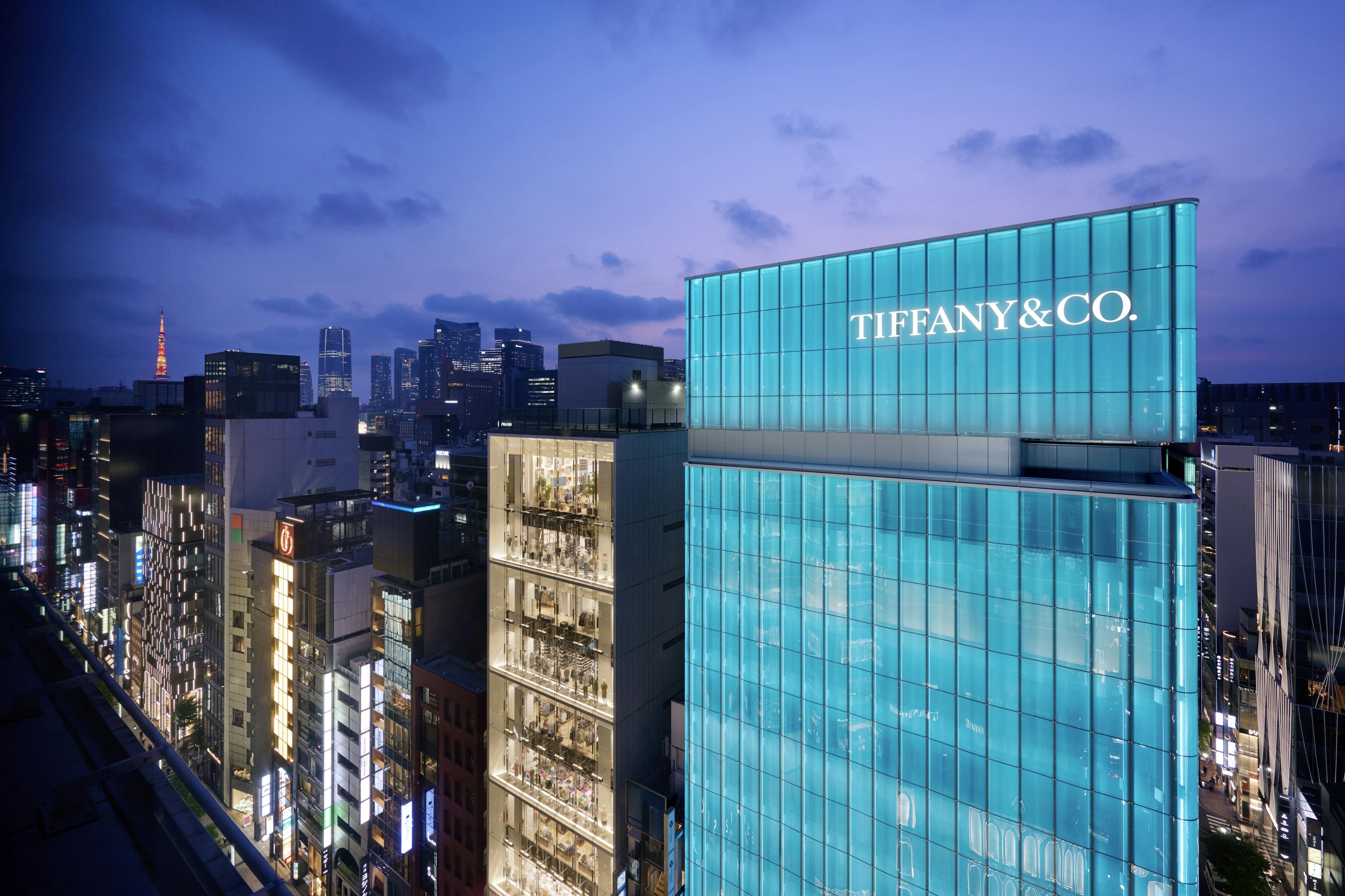
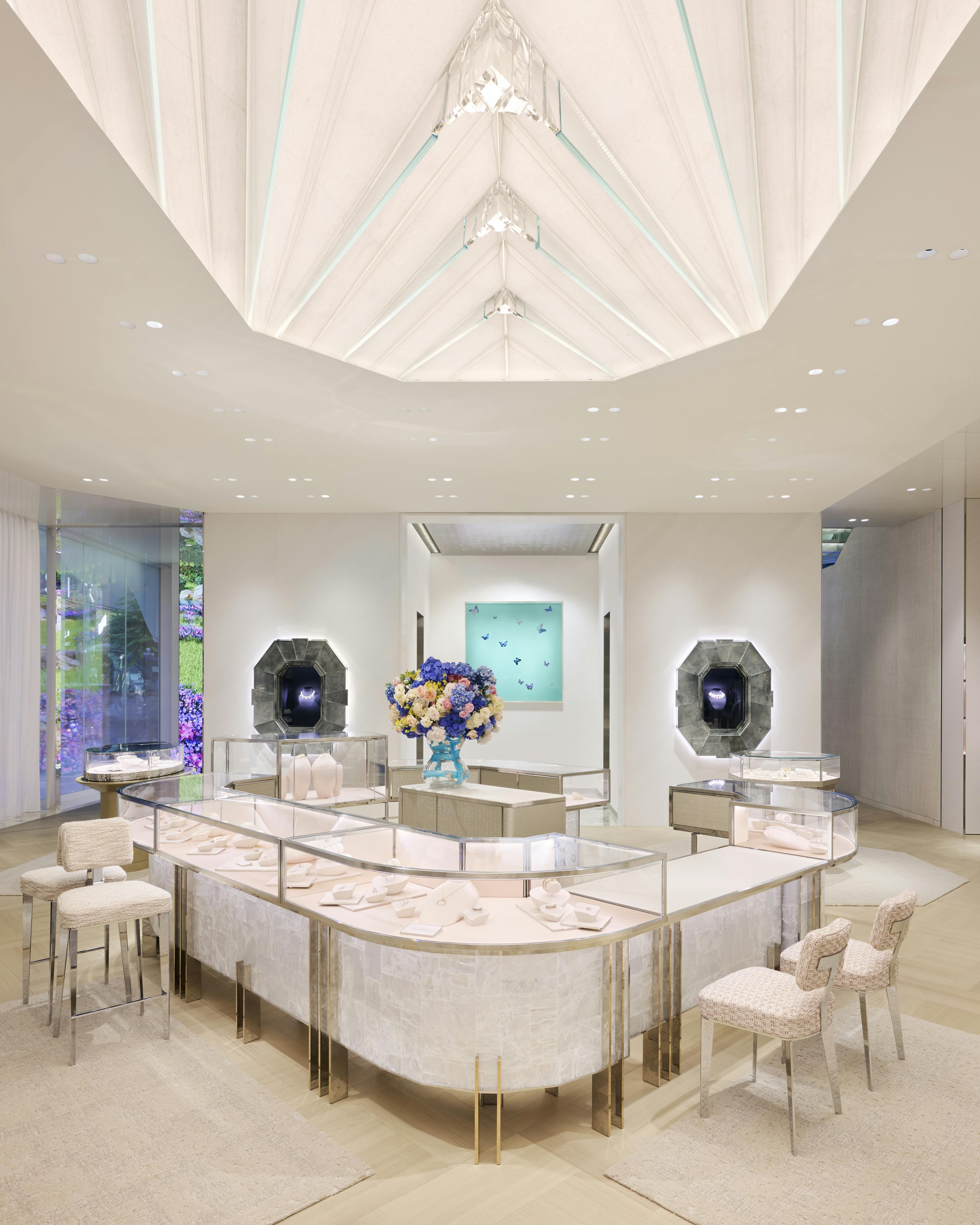
The building itself is a work of art. Designed by renowned Japanese architect Jun Aoki, the 66-meter-high façade evokes the flowing forms of wisteria, paying homage to Louis Comfort Tiffany’s iconic lamp designs. Curved glass panels ripple along Chuo-dori street, blending the poetic elegance of Tiffany’s aesthetic with the refinement of Ginza. Inside, New York-based architect Peter Marino has created an immersive interior where every detail – from spatial design to materials – reflects the Maison’s dedication to craftsmanship and artistry.
Spanning six floors and more than 2,400 square meters, the flagship offers a journey through Tiffany’s heritage, innovation, and contemporary vision. Visitors are welcomed by a striking artwork by Michelangelo Pistoletto, while a dramatic staircase lined with digital screens presents the “Immersive Moving Fresco” by Oyoram Visual Composer. Inspired by Tokyo’s Ninomaru Garden, the installation fuses technology, nature, and art, reminding all that craftsmanship transcends material boundaries.
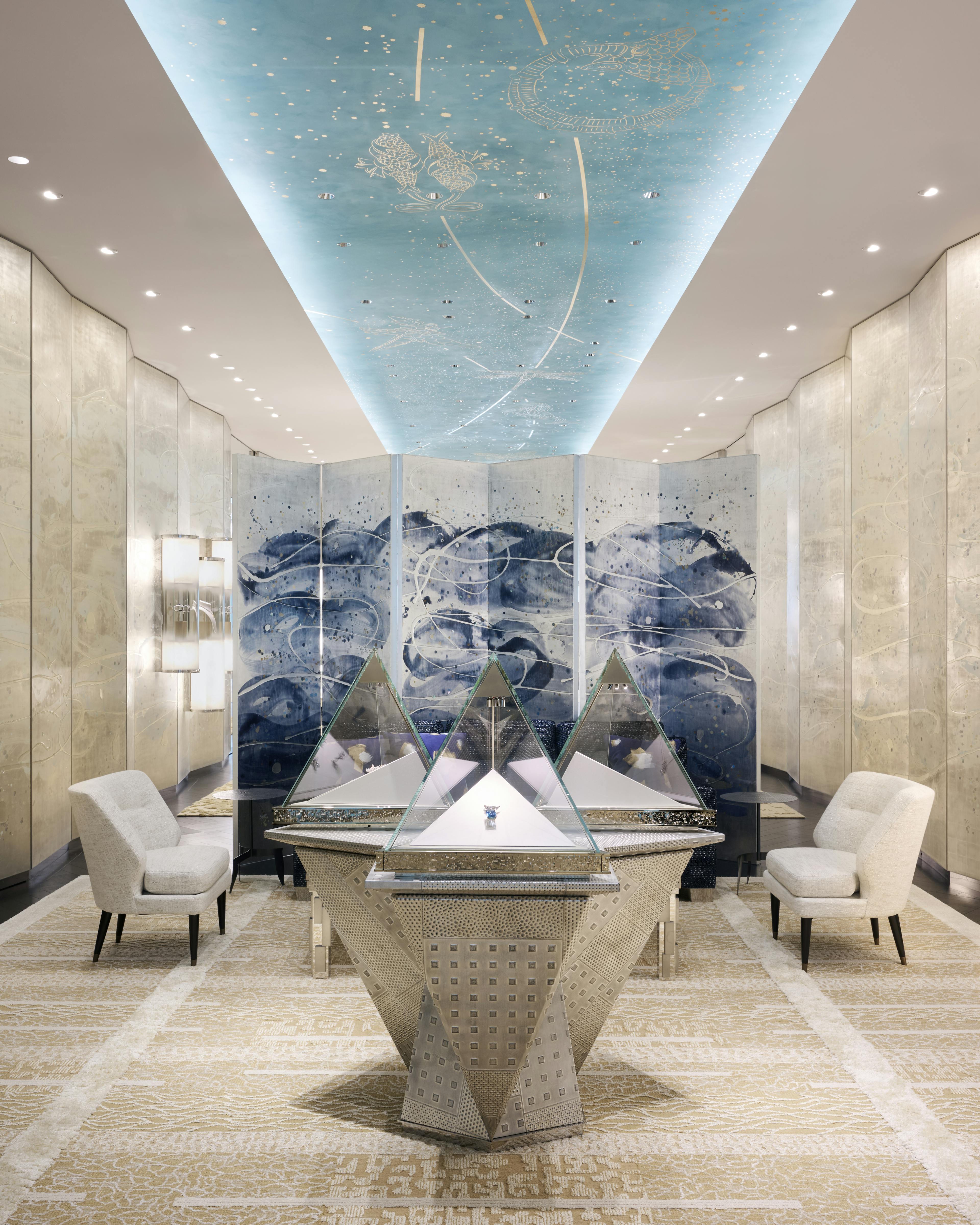
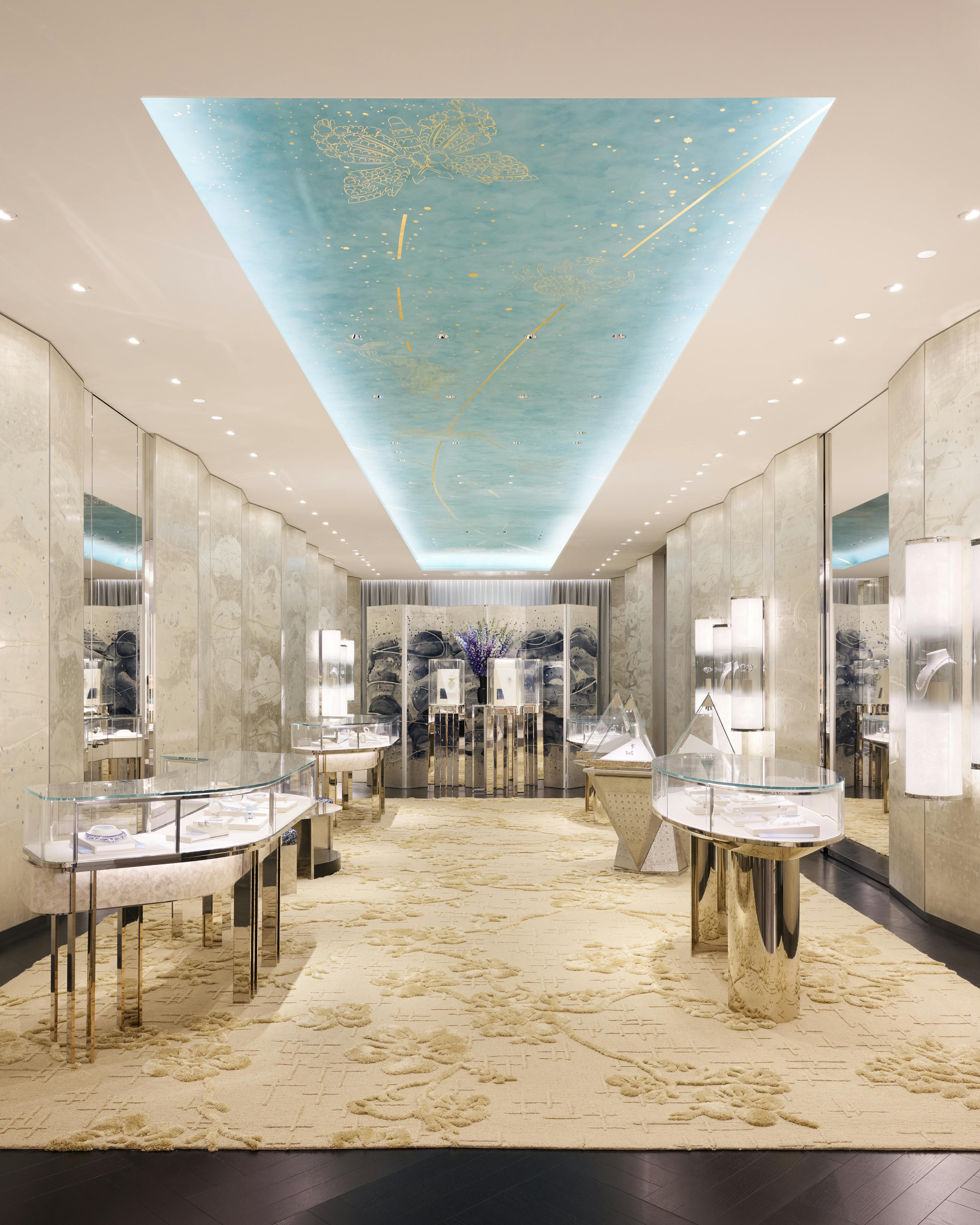
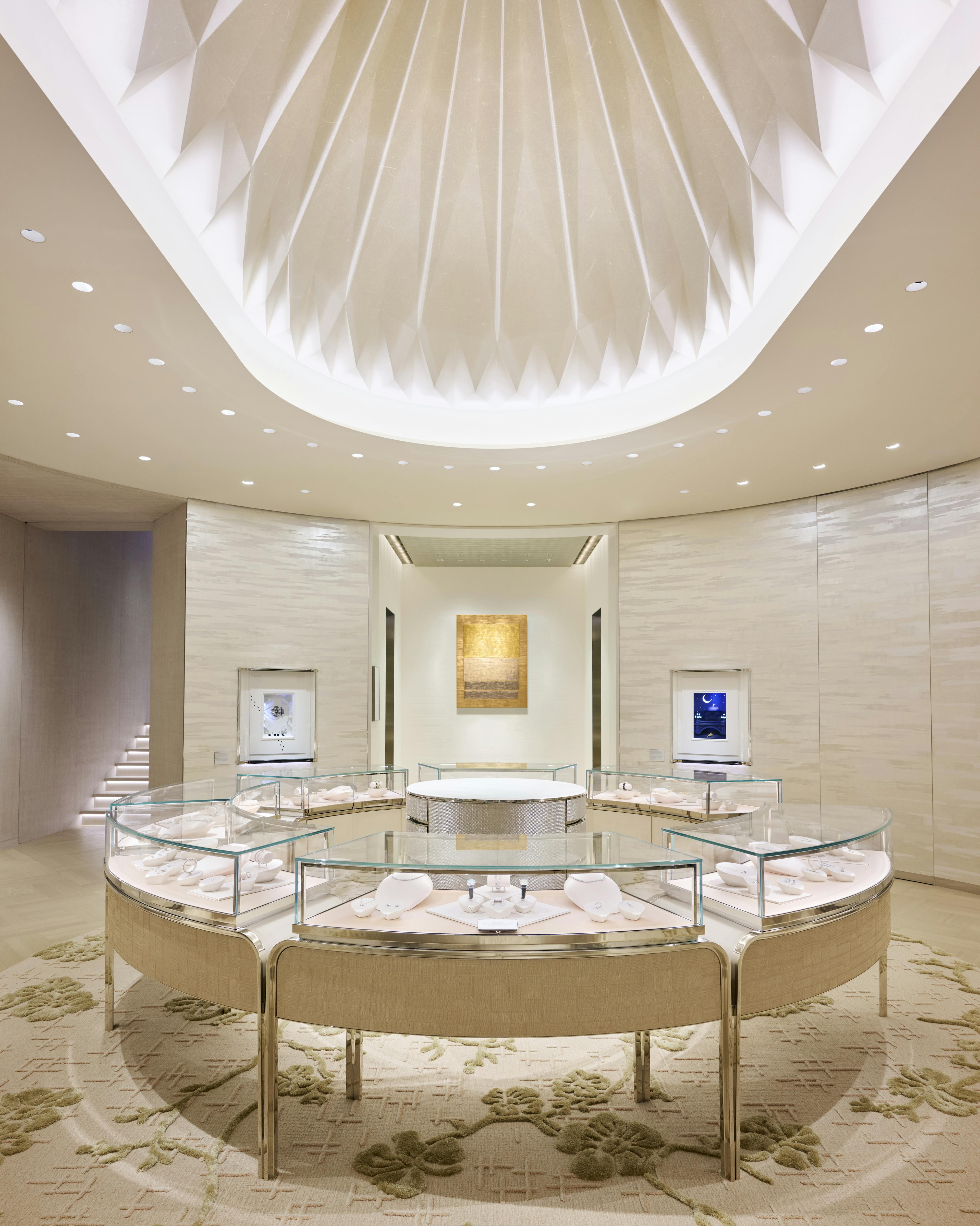
Japanese artistry resonates throughout the space. Ceilings adorned with Kanazawa gold leaf, origami-inspired washi paper installations, and Kabuki-inspired works by Mariko Kusumoto complement Tiffany’s signature collections. Iconic designs such as Lock, HardWear, T, and Knot are displayed alongside archival treasures and limited-edition creations, including rose gold and aquamarine Lock pendants, the Carat 128 aquamarine watch, and the Bird on a Flying Tourbillon timepiece. A dedicated floor showcases Tiffany High Jewelry and the legendary work of Jean Schlumberger, allowing visitors to witness the Maison’s technical mastery and creative imagination firsthand.
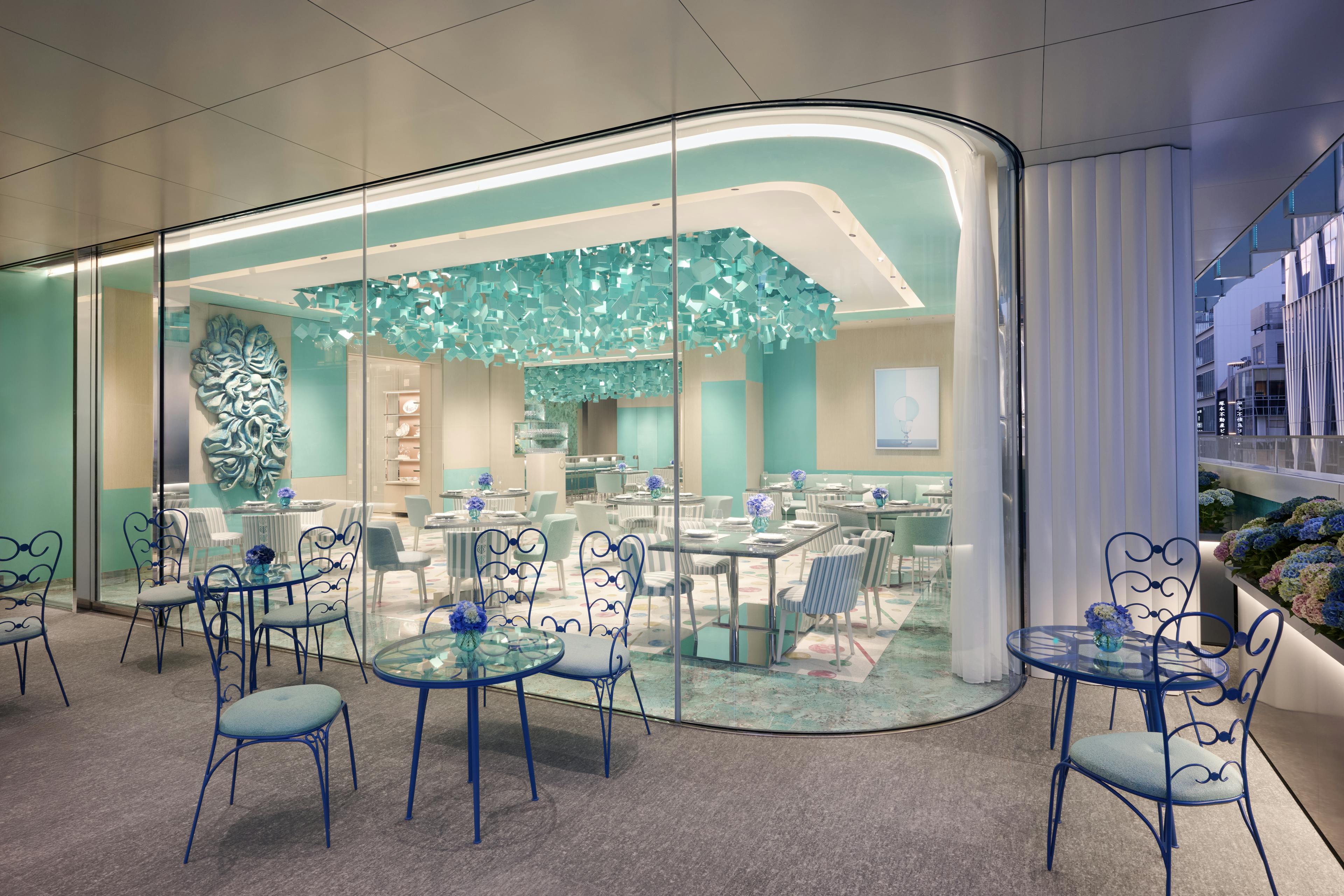
This celebration of craft extends to Tiffany’s first Blue Box Café in Japan, situated on the fourth floor. Overseen by award-winning chef Natsuko Shoji, the café offers a refined culinary experience that fuses Japanese seasonal ingredients with the elegance of Tiffany design. Guests can enjoy curated menus, from “Breakfast at Tiffany’s” to afternoon tea, alongside floral installations by Makoto Azuma, creating a harmonious dialogue between gastronomy, artistry, and environment.
By merging tradition and innovation, East and West, art and craft, Tiffany & Co. has created a space where visitors can experience the full spectrum of the Maison’s mastery: a luminous journey that celebrates the beauty of making, the power of creativity, and the timeless allure of exceptional craftsmanship.