“LIFE 360 Awards 2025”: LVMH recognizes 13 standout initiatives by its Maisons to accelerate its environmental transformation
Published on 12.12.2025 • 2 MINUTES- LVMH
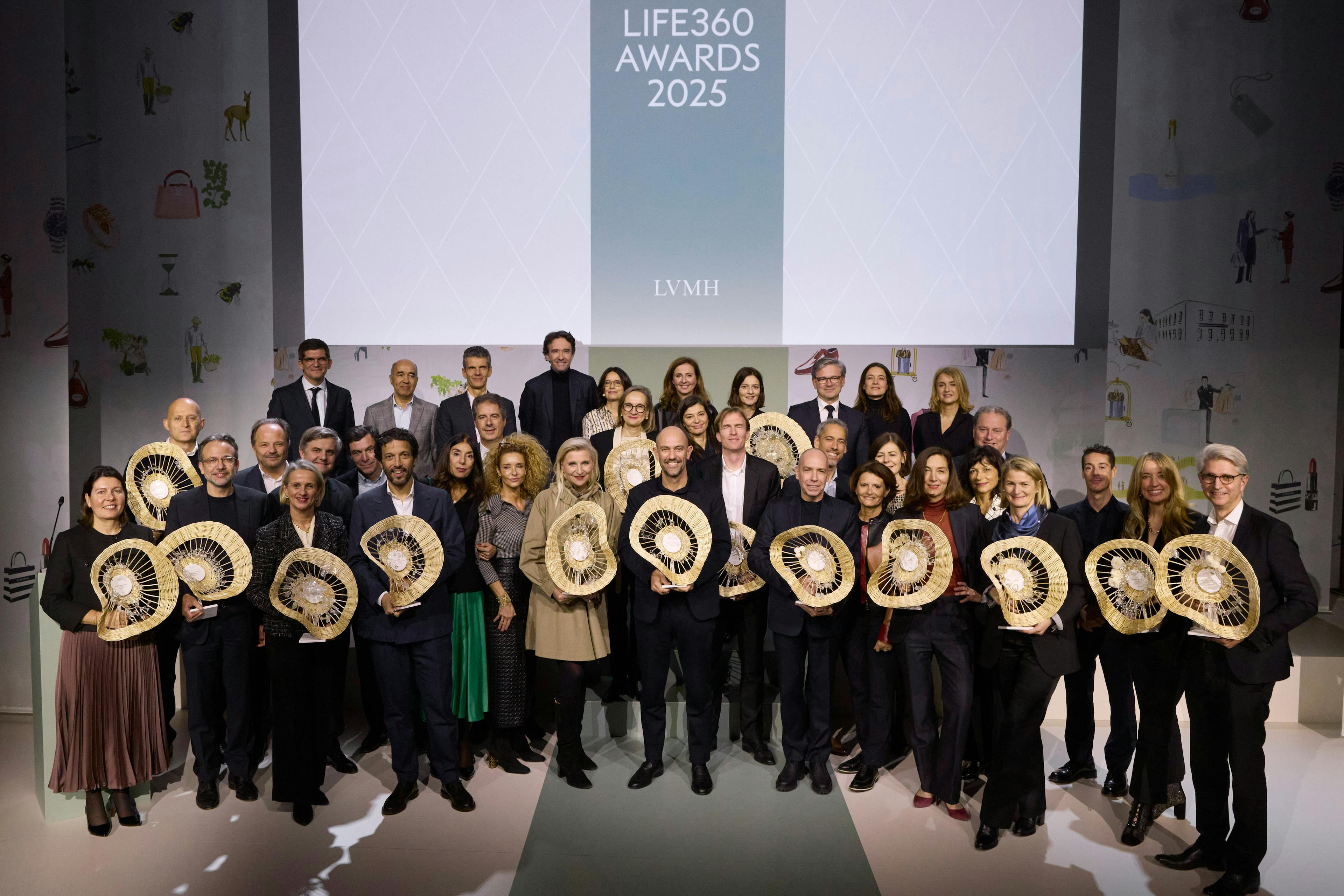
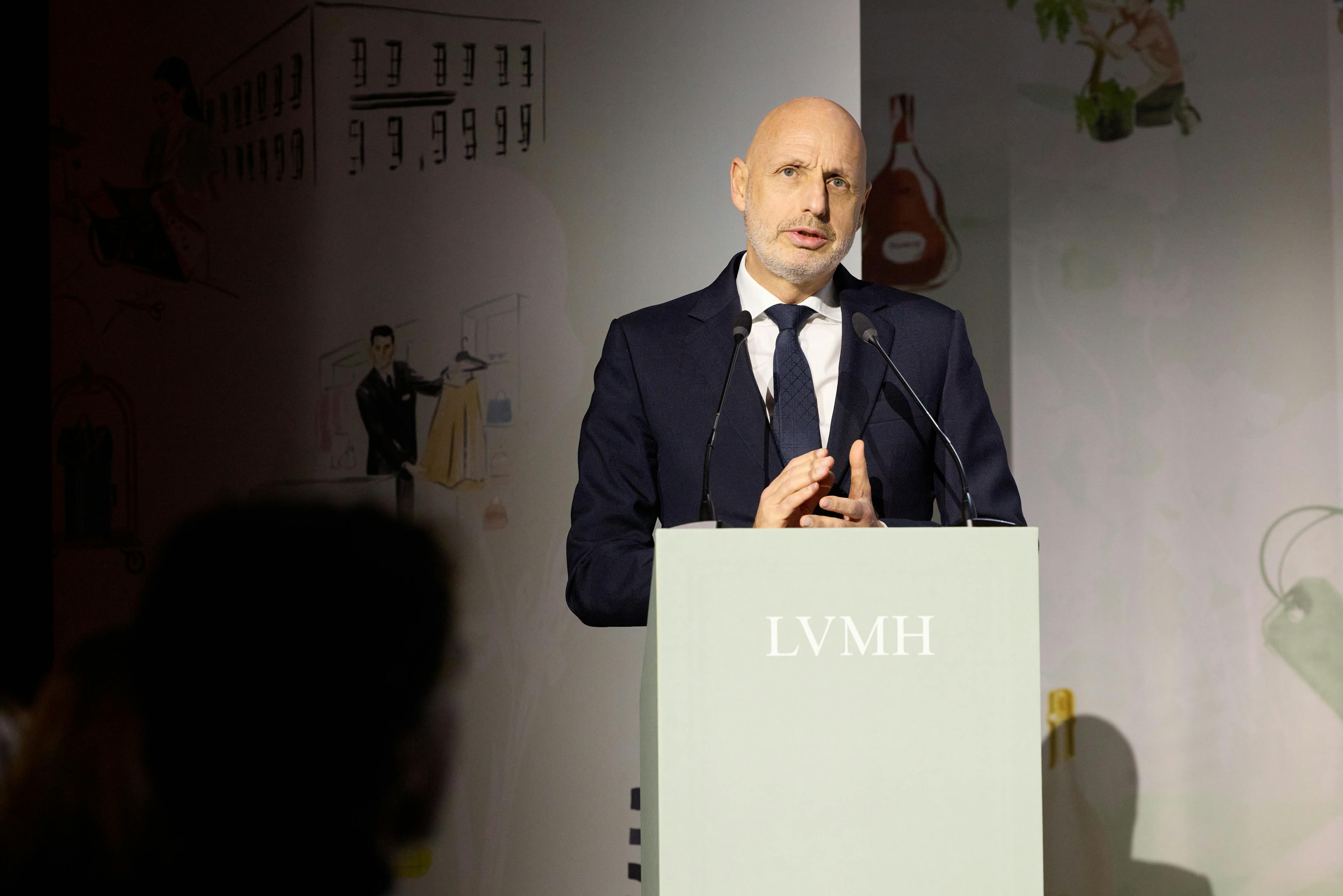
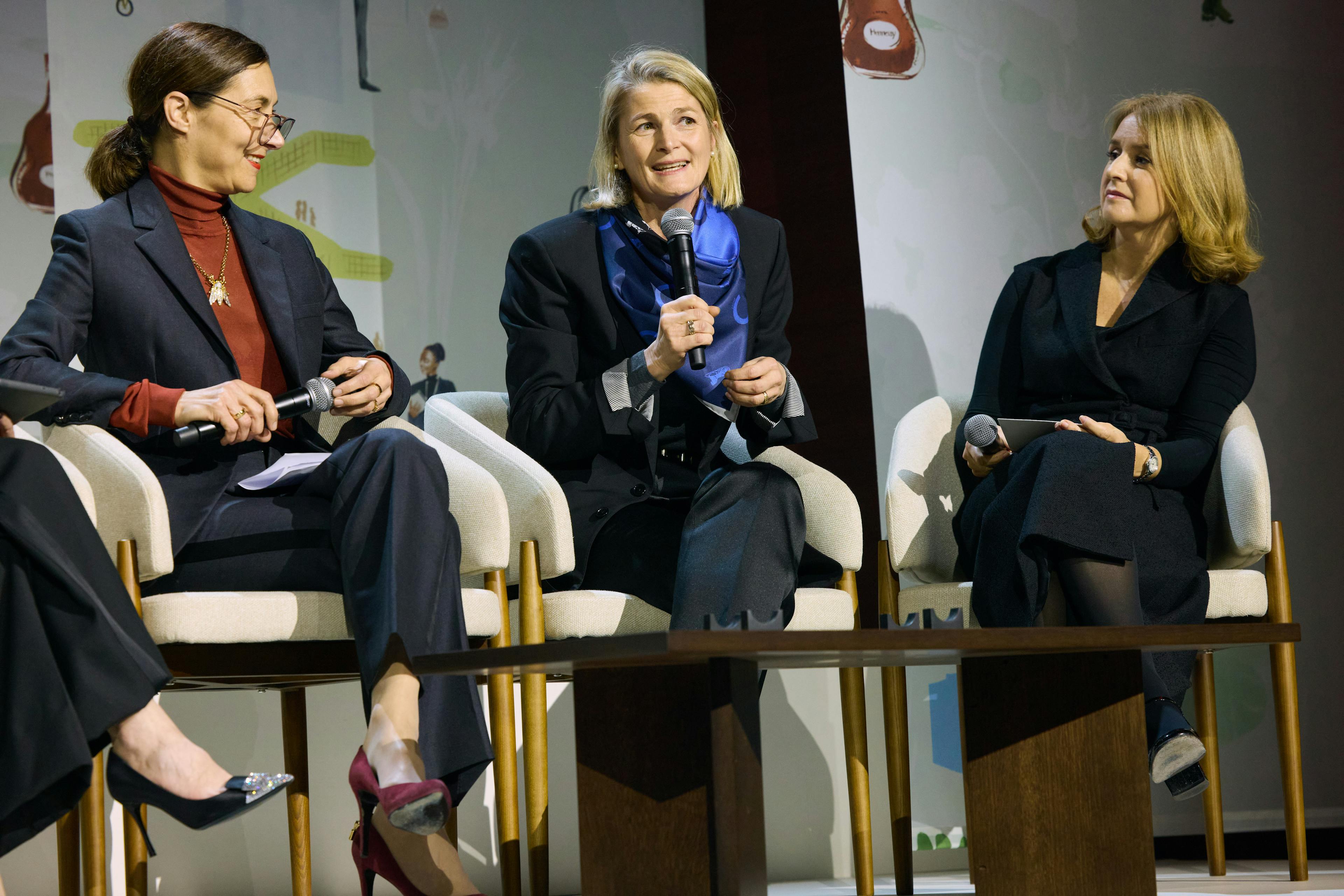
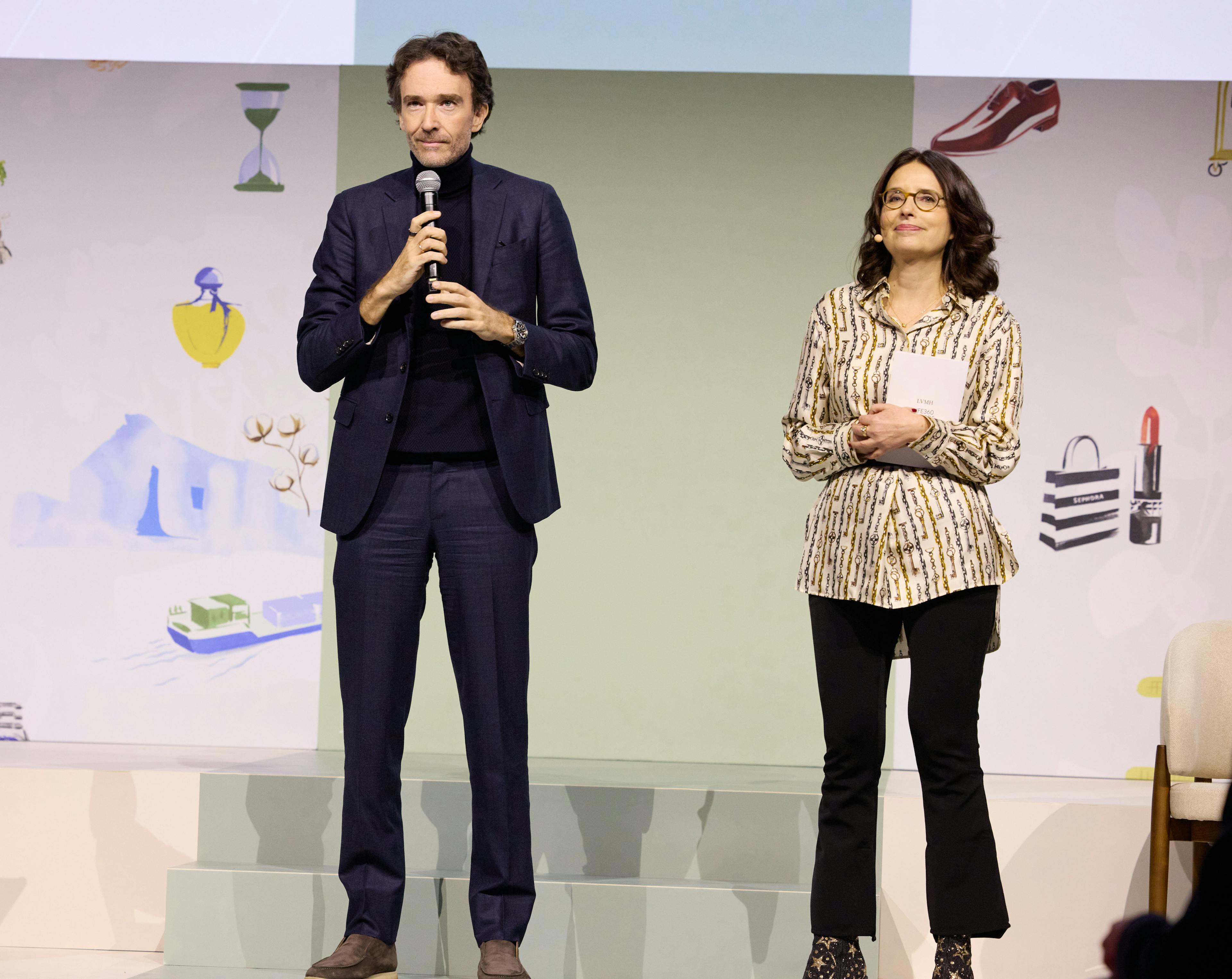
At the invitation of Antoine Arnault, Image & Environment, LVMH, and Hélène Valade, Environmental Development Director, LVMH, the Group brought together its Maisons, partners and numerous guests in Paris on Wednesday, December 10, for the first edition of the “LIFE 360 Awards.”
The ceremony, followed remotely by LVMH teams worldwide, distinguished 13 winning initiatives, selected from 187 submitted by 41 Maisons, which concretely illustrate the environmental transformation undertaken by LVMH, once again recognized with a CDP triple “A” rating for its action on climate, forests and water.
The LIFE 360 Awards lie at the heart of the LIFE 360 environmental program (LVMH Initiatives For the Environment), which structures the Group’s long-term strategy around five pillars: Climate, Biodiversity, Creative Circularity, Traceability & Transparency, and Stakeholders.
Since 2019, the Group has embarked on an ambitious climate pathway that has already delivered significant progress:
- A 55% reduction in its direct greenhouse gas emissions (Scopes 1 & 2), reaching its 2026 target two years ahead of schedule,
- The preservation and regeneration of more than 3.8 million hectares of natural habitats,
- An increase to 33% in the share of recycled materials used in products and packaging,
- A reduction of around one-third in its indirect emissions (Scope 3), driven by advances in circularity, biodiversity and traceability.
“The LIFE 360 Awards illustrate how our Maisons are advancing the Group’s environmental roadmap. This collective momentum confirms that these issues are at the very heart of our strategy and that LVMH’s long-term commitment has been recognized, for the second time, with a CDP triple ‘A’ score. The winning initiatives point us in a clear direction: a responsible form of luxury, underpinned by concrete and ambitious action,” said Antoine Arnault, Image & Environment, LVMH.
“The award-winning initiatives reflect the quality of the work carried out collectively around LIFE 360. They demonstrate tangible progress and create genuine momentum across the Group by encouraging the sharing of the most effective solutions between our Maisons and with our supplier partners. This dynamic remains essential to amplifying our impact,” said Hélène Valade, Environmental Development Director, LVMH.
The initiatives distinguished this evening will help shape the next steps of this roadmap and demonstrate our Maisons’ ability to combine creative excellence, environmental performance and economic efficiency.
The winners were selected by a Jury composed of Group executives and experts, working with an independent firm responsible for assessing the impact, degree of innovation and potential for deployment of the initiatives submitted.
13 RECOGNIZED INITIATIVES FROM LVMH MAISONS
Throughout the evening, the winning teams presented their initiatives, highlighting the diversity of approaches and the richness of the collaborations at work across the LVMH ecosystem.
The 13 award-winning initiatives cover all of the LIFE 360 pillars:
Biodiversity (nature & water)
- Nature – Louis Vuitton, “Bovine Regenerative Agriculture”
A program deployed at farm level to introduce regenerative livestock practices for one of the Group’s emblematic raw materials, leather, with the ambition, in particular, to restore biodiversity, rebuild water cycles and reduce the carbon footprint of the supply chain, while ensuring animal welfare.
- Water – Hennessy, “Global Water Strategy”
The implementation of a comprehensive water-management strategy, from vineyard to bottling, which has already led to a significant reduction in withdrawals between 2019 and 2024.
Climate (Scopes 1 & 2 / Scope 3)
- Scopes 1 & 2 – Tiffany & Co., deployment of photovoltaic capacity
Installation of significant solar capacity at the Maison’s diamond cutting & polishing facility in Botswana, reducing greenhouse gas emissions. It complements the Maison’s commitment to training and hiring local craftspeople.
- Scope 3 – Moët Hennessy, optimized logistics
Moët Hennessy has long been committed to reducing its transport-related carbon footprint. Through rigorous coordination of all teams involved across the entire supply chain, Moët Hennessy has progressively increased the share of maritime and rail transport, optimized road transport and limited air freight to 0.2% of tonne-kilometers. These sustained efforts led, in 2025, to a reduction of nearly 50% in transport-related carbon emissions compared with 2019. To continue and go even further, Moët Hennessy is also exploring alternative, more sustainable modes of transport in line with available innovations.
Integration & training
- Integration – CELINE, integrating environmental and social issues into its governance
A structured framework for integrating ESG criteria into the annual performance evaluation of Executive Committee members, making the company’s environmental and societal performance an explicit lever for management steering and engagement.
- Training – Guerlain, two training programs centered on bees, at the heart of the Maison’s identity
- Guerlain For Bees: an awareness-raising initiative on the role of bees, delivered by employees and aimed at primary-school pupils around the world.
- Women For Bees: a program in partnership with UNESCO that enables women across the globe to become beekeepers, thereby contributing to the local economy and biodiversity.
Traceability & transparency
- Traceability – Christian Dior Couture, “TRACE”
An end-to-end traceability approach linking raw materials, craftsmanship and finished product, strengthening both control over the supply chain and the client experience.
- Transparency – Bvlgari, “Bvlgari Connected Jewelry and Bvlgari Digital Passport"
Bulgari turns transparency into a tangible experience. A unique micro-engraving on each creation, readable via a smartphone scan using AI, provides access to its Digital Passport, revealing gemological certificates, origin and craftsmanship. An innovation embedded at the heart of every piece.
Creative circularity – eco-design & second life
- Creative ecodesign – Parfums Christian Dior, plastics strategy
An ambitious strategy aimed at gradually phasing out virgin fossil-based plastics from customer packaging, in favor of recycled, bio-based or alternative materials.
- Second life & reuse – Louis Vuitton, “Re-Source”
A reuse program for dormant materials that gives a second life to unused inventories, accelerates circularity and opens new creative possibilities for the ateliers.
“Joining forces” – Métiers partners & inter-Maison pooling
- Métiers partners – Sephora, “Sampling Library”
A shared solutions library made available to Sephora’s partners and beauty Maisons to rethink samples, reduce their environmental impact and scale up the most responsible options.
- Inter-Maison pooling – Christian Dior Couture, Louis Vuitton & Rimowa, “One Route”
A shared logistics model between several Maisons in the United States that optimizes transport capacity utilization, reduces carbon emissions from logistics flows and illustrates the potential for synergies within the Group.
In addition to these awards, the Jury presented a special “Coup de cœur” Prize to Moët Hennessy in recognition of the scale and consistency of its commitment through its Living Soils, Living Together program. For many years now, the Champagne and Wines & Spirits Maisons have been working to reduce their environmental footprint and have also submitted more than 40 projects covering all categories of the LIFE 360 Awards. The Jury wished to give a special mention to their commitment to preserving and regenerating soils, with initiatives rolled out across all their terroirs, and to the creation of an international forum dedicated to this topic, the World Living Soil Forum.
Among these, Château Galoupet, a Cru Classé Côtes de Provence acquired by LVMH in 2019, illustrates how this ambition is translated on the ground: already certified organic since 2023, the estate has deployed a regenerative viticulture approach (cover crops on 100% of the vineyard, more than 2.6 km of agroforestry hedgerows, regenerative hydrology structures, increased soil organic matter and the installation of numerous shelters for biodiversity).
This high level of ambition has just been recognized by the estate’s “Regenerative Organic Certified® (ROC™)” certification, one of the world’s most rigorous labels, which confirms Château Galoupet’scommitment to reconciling excellence, responsibility and positive impact on its human and natural ecosystems.
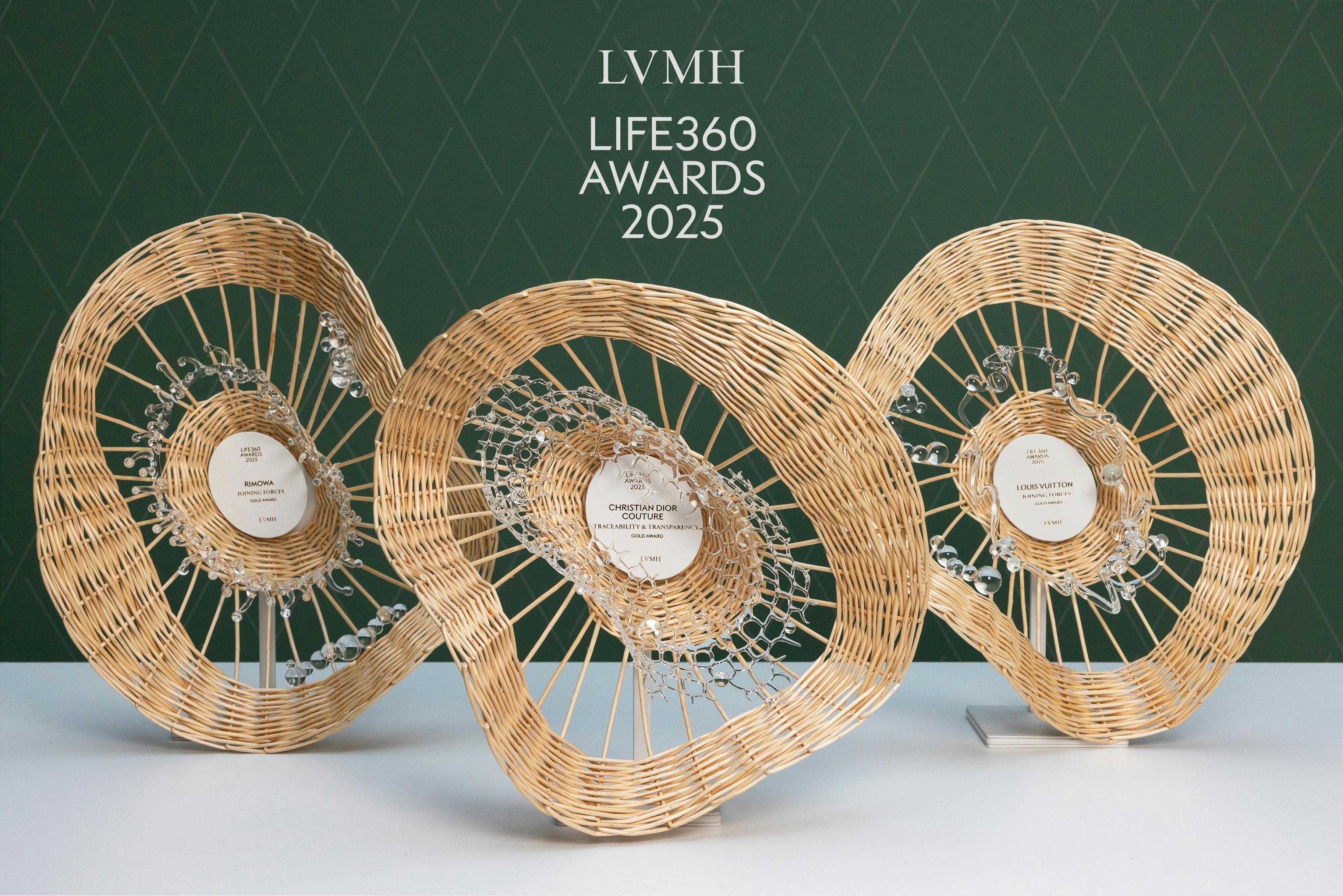
For this first edition, the awards presented to the winners were designed by Jade de Gueltzl, Windows Creation & Special Sustainable Projects Director, within Christian Dior Couture’s Visual Merchandising team. Embodying the alliance of the plant, animal and mineral worlds, they were crafted in wicker with Intreccio vivo artisans, in glass by artist Simone Crestani, and in leather with L’Atelier Luxe.